


“It is said that no one truly knows a nation until one has been inside its jails. A nation should not be judged by how it treats its highest citizens, but its lowest ones.”
One of Christchurch mosque shooter’s lawyers began their closing submissions today in the Court of Appeal by quoting former South African President and activist Nelson Mandela.
The lawyer, whose name and gender have been suppressed and is being referred to as Counsel A, told the three-member court that the rule of law applied to everyone, even their client, who has been described as the most “reviled” person in New Zealand.
At the hearing today, Brenton Tarrant’s lawyers submitted that minimum prison standards were ignored from the time he was first remanded in custody in 2019 until the following year, when he entered his guilty pleas.
The lawyers have throughout the hearing presented a number of independent assessments of the unit the gunman was held in to support their case.
These included the “Nelson Mandela Rules”, which were adopted by the United Nations in 2015 and govern the minimum standard for prisoners.
The rules were named in honour of Mandela, who advocated for the fair and humane treatment of all, including prisoners, after spending 27 years in custody.
This week, Tarrant and his lawyers have been in the senior court, seeking leave to appeal against his convictions and to vacate his guilty pleas for the mass shootings at two Christchurch mosques on March 15, 2019.
He was jailed for life without parole in 2020 for murdering 51 people at the Al Noor and Linwood mosques.
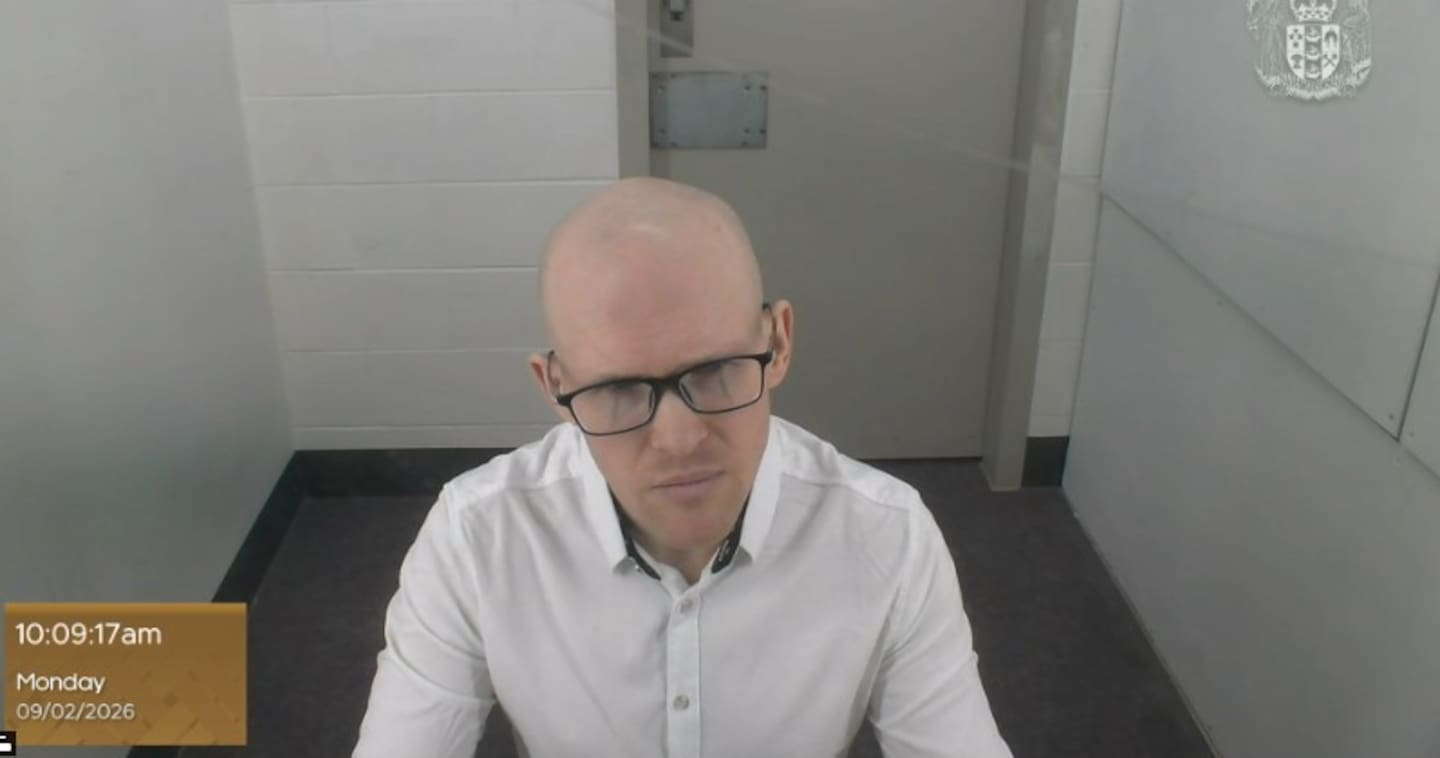
The Christchurch mosque gunman gave evidence at the Court of Appeal on Monday. Photo / Ministry of Justice
The crux of his claim is that the harsh prison conditions he was subjected to while awaiting trial severely impacted his mental health and meant he was effectively “forced” to change his plea to guilty.
“If I had another option, I would have taken it,” he told the court while giving evidence by audiovisual link earlier this week.
His legal team maintains that the claimed inhumane conditions meant he couldn’t adequately prepare his defence case.
They argue that as a result of these conditions, the gunman felt unable to make rational choices, retain “mental equilibrium” or engage in the judicial process in a logical, consistent and appropriate manner.
Counsel A pointed to the indication he gave his lawyers of a desire to plead guilty, only to change his mind a couple of days later, as evidence of his fluctuating mental health.
Those conditions, which have been detailed in court this week, include being held in severe social isolation for over a year, while under constant video surveillance.
He was also subject to 15-minute checks by staff that ran around the clock, which involved opening the flap in his cell door every 15 minutes. At night, a torch was shone in.
Tarrant had been assessed as being “at risk”, but argued this was simply an excuse to deprive him of his basic needs and resulted in him being held in conditions which he described as “torturous and inhumane”.
Contact with staff was kept to a minimum, to the point it was described as transactional. There were many hours when he sat in his cell with nothing to do.
“The conditions in which he was kept are incomparable to any other inmate in the modern history of the Department of Corrections,” his second lawyer told the court.
His lawyers will continue presenting their case this afternoon, with the Crown expected to give their final submissions tomorrow.
Catherine Hutton is an Open Justice reporter, based in Wellington. She has worked as a journalist at the Waikato Times and RNZ. Most recently she was working as a media adviser at the Ministry of Justice.

Take your Radio, Podcasts and Music with you
Get the iHeart App

Get more of the radio, music and podcasts you love with the FREE iHeart app. Scan the QR code to download now.

Download from the app stores


Stream unlimited music, thousands of radio stations and podcasts all in one app. iHeart is easy to use and all FREE


