A Dunedin man with a history of sexual abuse against children has been jailed indefinitely with a minimum prison term of seven years and three months for breaking into a flat and raping a student last year.
Keith Wicks-Cairns, 37, appeared before Justice Melanie Harland in the High Court at Dunedin this morning.
Family and friends of the victim occupied the public gallery of the court.
Justice Harland outlined the summary of facts.
At about 1.45am on February 4, 2025, Wicks-Cairns was driving in a Dunedin neighbourhood with a large student population, the court heard.
He parked on Queen St near Toroa College, where CCTV captured his movements.
The court heard he got out of the vehicle wearing dark clothing and red shoes, and walked north along the street before approaching a nearby property.
His face was covered with a beanie or similar covering to conceal his identity.
Wicks-Cairns had no authority to enter the address and no connection to the occupants, Justice Harland said.
He entered the house and went to an upstairs bedroom where a young woman was asleep.
At the time, Wicks-Cairns was 36.
Justice Harland said he placed his hand over the woman’s mouth and pushed her head into a pillow as she woke, repeatedly telling her she was “going to be quiet”.
When she screamed and tried to fight him off, he restrained her by the wrists and forced her face down on to the mattress, telling her “no one is going to hear you”.
The woman repeatedly pleaded with him to stop, but he ignored her pleas.
During the attack, she felt faint and panicked and asked for a window to be opened because she was struggling to breathe. Wicks-Cairns allowed her to briefly open a window before directing her back on to the bed.
Justice Harland said he then raped the woman and forced further sexual acts on her.
After the assault, he forced her downstairs to wash her hands before taking her back to the bedroom and removing the fitted sheet from the bed.
He then threatened her that if she told anyone, he would return, before leaving the house carrying the sheet.
CCTV later captured him running back to his vehicle on Queen St at about 2.26am, still carrying the sheet, before driving away.
The attack lasted about 20 minutes, the court heard.
A medical examination later recorded injuries, including redness around the victim’s neck and wrists, bruising to her body, a split inner lip and other injuries.
When arrested by police, Wicks-Cairns initially said he did not know what officers were talking about and declined to comment further.
Justice Harland said the victim and her flatmates had been “profoundly impacted” by the offending.

Report writers said rapist Keith Wicks-Cairns, 37, demonstrated elements of psychopathy. Photo / Ben Tomsett
Victim impact statements
Two victim impact statements were read to the court, outlining the lasting emotional, psychological and financial harm caused by the offending.
The woman who was sexually assaulted told the court the attack had changed her life in ways she “never imagined”.
“Before this happened, I was a confident young adult who felt excited about the future,” she said in her statement.
“Now I feel like that version of me has been taken away.”
She described experiencing ongoing anxiety, panic and vivid nightmares that leave her waking “sweating and terrified”.
The offending had also affected her ability to trust others and her sense of independence.
“I used to feel strong and independent. Now I often feel small, exposed and powerless. I feel like I’m constantly on alert, waiting for something to go wrong.”
She said the effects were not only emotional, but physical as well, including exhaustion from poor sleep and the stress of medical examinations following the assault.
The attack had also changed how she lived day-to-day, she said.
“I struggle to relax in my own home, the place where I should feel safe. I check the doors and windows over and over because I’m scared I missed something.”
The impact had extended to her work, study and financial situation, with time off and medical costs adding further pressure.
Despite the trauma, she told the court she was determined not to let the offending define her future.
“Knowing you are in prison makes me happy,” she said, addressing the defendant.
“Knowing that you can’t do this to anyone else makes me feel like I’ve achieved something good for the community.”
A second statement was provided by the victim’s flatmate, who was in the home during the burglary and assault.
She told the court that although she was not physically harmed, the events had caused ongoing anxiety and fear.
“My flat used to be the place where I felt safe, but now I struggle with constant worry,” she said.
Knowing her close friend had been sexually assaulted inside their home had added “another layer of disgust, sadness, fear and distress”.
“I carry feelings of sickness, shock, anger and guilt that I could not prevent or stop what happened.”
She said the incident had disrupted daily life and forced changes to improve security at the property, including installing new locks, cameras and lighting.
Even with those measures, she said she still did not feel completely safe.
“The event has changed the atmosphere in our home,” she said.
The experience had also led to counselling, time off work and financial costs associated with supporting her flatmate through the investigation and court process.
“This burglary and attack has impacted nearly every part of my life,” she said.
“It’s disgusting and unfair and something I will never forget.”
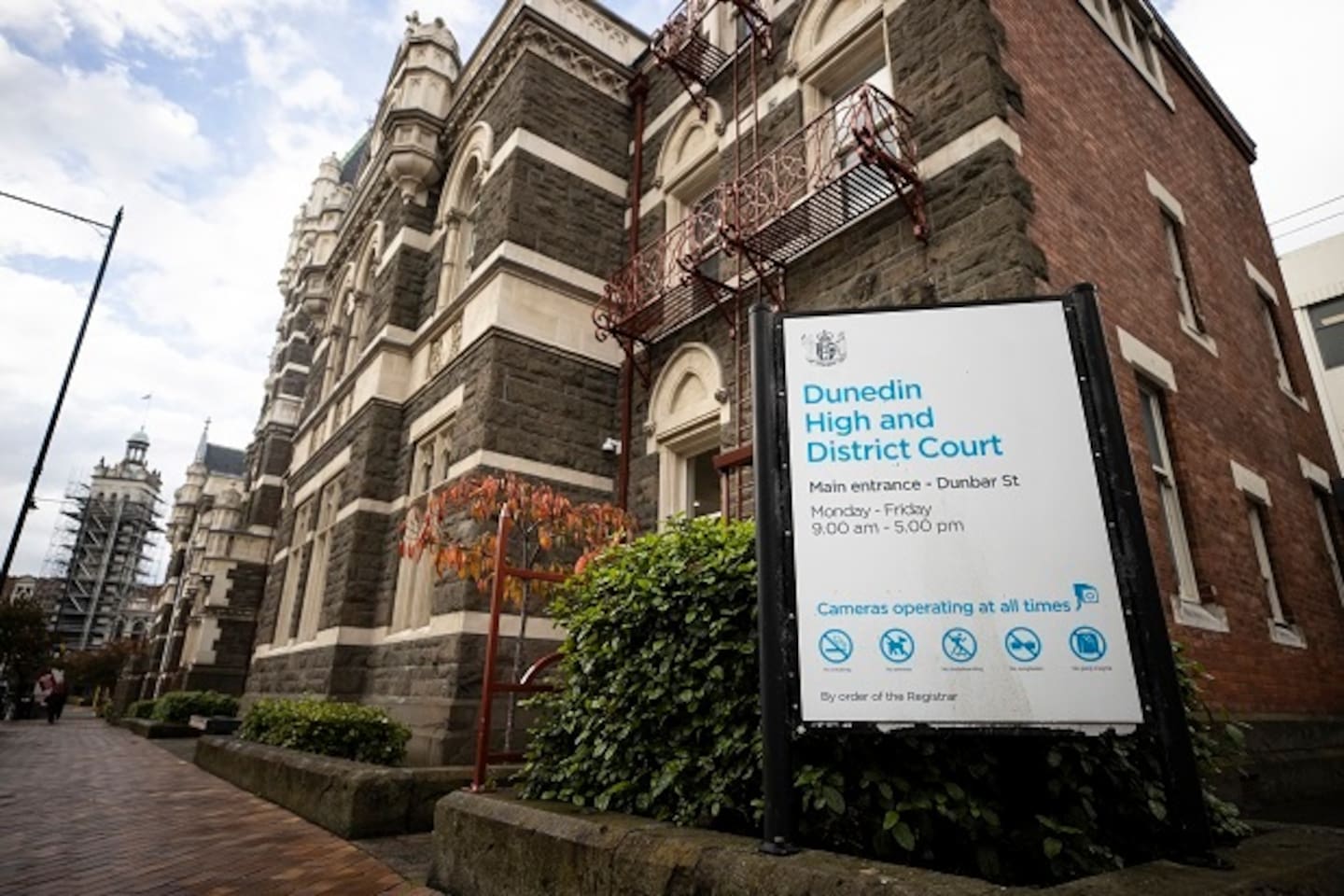
Keith Wicks-Cairns was sentenced in the High Court at Dunedin on Tuesday. Photo / George Heard
Crown submissions
Crown prosecutor Richard Smith told the court the offending warranted a lengthy prison sentence, describing the rape as part of a serious home invasion in which the victim had been restrained and violated in her own home.
He submitted a starting point of about 12 to 12.5 years’ imprisonment was appropriate.
That starting point reflected the violence involved, the detention of the victim, and the fact the offending occurred during a burglary inside the victim’s home – an aggravating feature that applied “to a very high degree”.
Smith said there was also a level of premeditation, noting Wicks-Cairns had told assessors he paused during the offending to consider his situation before continuing.
“Effectively, he decided things couldn’t get any worse and then continued to violate the victim,” Smith said.
The Crown also sought an uplift for Wicks-Cairns’ previous sexual offending.
Smith told the court the defendant had earlier convictions for sexually offending against two 10-year-old girls from separate households.
In that case, he had admitted grooming the victims’ mothers to gain access to the children.
He had also offended against both victims while they were asleep in their own beds.
“Perhaps most striking was that Wicks-Cairns reoffended against a second victim three weeks after being confronted by the first victim’s mother and told police would be contacted,” Smith said.
The Crown said an uplift of about 10% was appropriate to reflect that history, along with his breaches of release conditions and obligations under the child sex offender register.
Smith acknowledged the defendant was entitled to credit for his guilty pleas, which had spared the victims the need to give evidence at trial, though the pleas came only after what he described as a strong Crown case.
He also acknowledged Wicks-Cairns had experienced a highly deprived upbringing and had himself been sexually abused as a child.
However, Smith said the defendant had previously been given opportunities for rehabilitation and had failed to take them.
Smith said the key issue before the court was public safety.
Expert reports assessed Wicks-Cairns as being at “very high risk” of committing further serious sexual offending, he said.
Smith urged the judge to place little weight on letters written by the defendant claiming the case had been a “wake-up call” and that he was willing to undertake rehabilitation.
He said the defendant had frequently answered “no comment” during psychological interviews and had shown no genuine insight, remorse or empathy for the victims, instead displaying “self-pity that he was caught”.
Report writers had also found he met several markers on the psychopathy checklist, Smith said.
Defence submission
Defence counsel Joshua Grainger accepted the seriousness of the offending and acknowledged the significant harm caused to the victims.
“There is not an incredible degree of difference between the Crown and ourselves in terms of the appropriate outcome,” he said.
Grainger said the only real point of disagreement between the parties was the extent of premeditation involved in the offending.
The defence accepted that an uplift was appropriate for Wicks-Cairns’ previous sexual offending convictions.
Grainger submitted that the court should instead impose a long finite sentence, rather than preventive detention.
The lawyer acknowledged Wicks-Cairns had a difficult background and had himself been sexually abused as a child.
He said that trauma appeared to form part of the offender’s pathway to the present offending, including substance abuse following the death of his brother.
Those factors did not excuse the offending but helped explain how it came about, Grainger said.
The defence also argued the court should consider the offender’s potential for rehabilitation.
Grainger said Wicks-Cairns had previously engaged in treatment programmes and had voluntarily sought counselling through ACC, demonstrating a willingness to participate in rehabilitation.
Sentence
Justice Harland said Wicks-Cairns’ previous sexual offending convictions were a significant personal aggravating factor.
In 2013, he was sentenced to four years and 10 months’ imprisonment for sexual offending against two girls under 12, receiving a first strike warning and was also placed on the child sex offender register.
The court then considered mitigating factors, including Wicks-Cairns’ difficult childhood.
Justice Harland said he experienced severe deprivation, including witnessing domestic violence as a baby, suffering abuse from his father and being placed in state care at the age of 3.
He was diagnosed with ADHD at 5, began using alcohol and cannabis at 12, and was referred to a treatment programme for harmful sexual behaviour as a teenager.
Justice Harland said she was satisfied the evidence showed a very high likelihood of further serious sexual offending if he were eventually released.
The judge imposed preventive detention with a minimum period of imprisonment of seven years and three months.
For the two charges of sexual violation by unlawful sexual connection, Wicks-Cairns was sentenced to six years’ imprisonment on each charge, to be served concurrently.
On the burglary charge, he was sentenced to three years’ imprisonment, also concurrent.
Those terms were effectively absorbed by the sentence of preventive detention.
Where to get help:
If it’s an emergency and you feel that you or someone else is at risk, call 111.
If you’ve ever experienced sexual assault or abuse and need to talk to someone, contact Safe to Talk confidentially, any time 24/7:
• Call 0800 044 334
• Text 4334
• Email support@safetotalk.nz
• For more info or to web chat visit safetotalk.nz
Alternatively contact your local police station - click here for a list.
If you have been sexually assaulted, remember it’s not your fault.
Ben Tomsett is a multimedia journalist based in Dunedin. He joined the Herald in 2023.
Take your Radio, Podcasts and Music with you
Get the iHeart App

Get more of the radio, music and podcasts you love with the FREE iHeart app. Scan the QR code to download now.

Download from the app stores


Stream unlimited music, thousands of radio stations and podcasts all in one app. iHeart is easy to use and all FREE