

Six months after his decades-long bid for freedom was dealt a major blow by the Court of Appeal, one of New Zealand’s most notorious convicted double-murderers has been thrown a lifeline from the Supreme Court.
Scott Watson has been behind bars since 1999, after his convictions for the murders one year earlier of Ben Smart and Olivia Hope in the Marlborough Sounds.
He has always maintained his innocence, including at an unsuccessful Parole Board hearing earlier this year and in lengthy Court of Appeal proceedings that ended in September with a finding that his trial had been fair.
“There is no doubt the jury was entitled to treat the strands of circumstantial evidence we have outlined as consistent with, and indeed pointing strongly towards, Mr Watson’s guilt,” the Court of Appeal panel wrote.
But in a written ruling issued today, the nation’s highest court said it would reconsider part - but not all - of the Court of Appeal’s decision.
Specifically, the Supreme Court will consider submissions regarding the reliability of witness Guy Wallace, who identified Watson as having been with the young couple on a water taxi the last time they were seen alive.
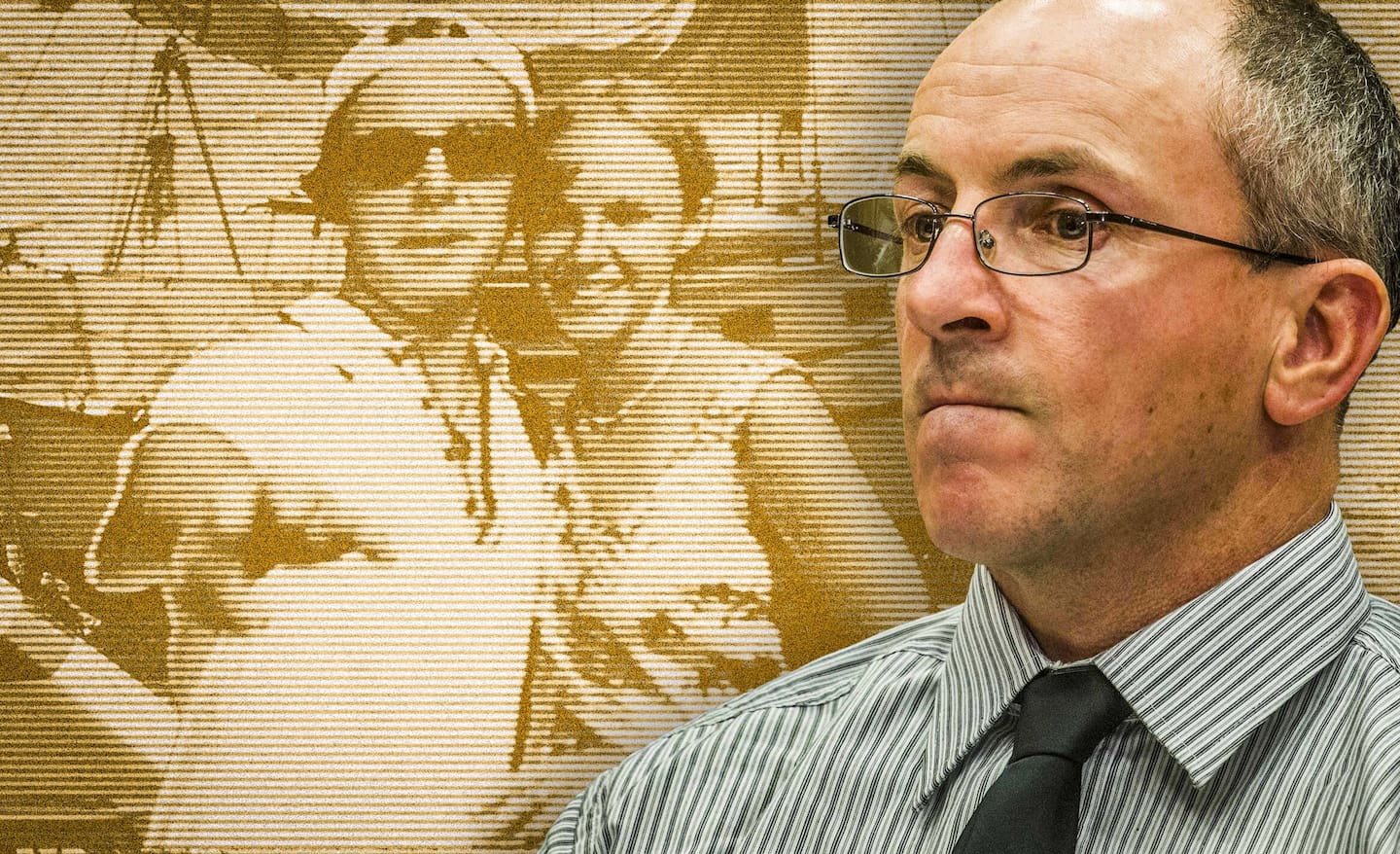
Scott Watson's boat, Blade and Ben Smart and Olivia Hope background with Scott Watson inset. Composite Photo / NZME
“We consider it is not necessary in the interests of justice to hear and determine the other proposed grounds of appeal, and so the application for leave to appeal is otherwise dismissed,” the Supreme Court noted.
Hope, 17, and Smart, 21, were last seen stepping off a water taxi in Endeavour Inlet, in the Marlborough Sounds, in the early hours of New Year’s Day 1998.
The young friends had attended a New Year’s Eve celebration at Furneaux Lodge the evening before. Wallace was the lodge’s bartender.
They left in the water taxi with a lone man, who offered them a place to sleep on his yacht. They have not been seen since, alive or dead.

Ben Smart and Olivia Hope. Photo / Supplied
It has been accepted that Hope and Smart died at the hands of the lone man in circumstances that amounted to murder.
Watson’s first Court of Appeal bid in 2000 also failed. But in 2020, then Governor-General Dame Patsy Reddy again referred the convictions to the Court of Appeal to determine whether a miscarriage of justice may have occurred.
“Ultimately, the Crown presented a compelling circumstantial case to show that only Mr Watson could have been the lone man,” the Court of Appeal justices wrote in their decision five years later.
“The evidence was carefully presented, challenged, and subjected to submission and analysis. It was a fair trial.”
Wallace’s evidence was discussed at length in hearings before the Court of Appeal issued its decision.
Wallace initially described the lone man as having long, scraggly hair, in direct contrast to the photos of Watson from that night showing he had short hair.
Watson’s lawyer, Nick Chisnall KC, had argued the police exerted significant “interrogative and moral pressure” to get Wallace to change his story during a subsequent police interview.
Wallace was initially shown a photo of Watson that was black and white and taken eight years before the couple’s murder. He was said to have told police: “No bloody way that it was this guy”.
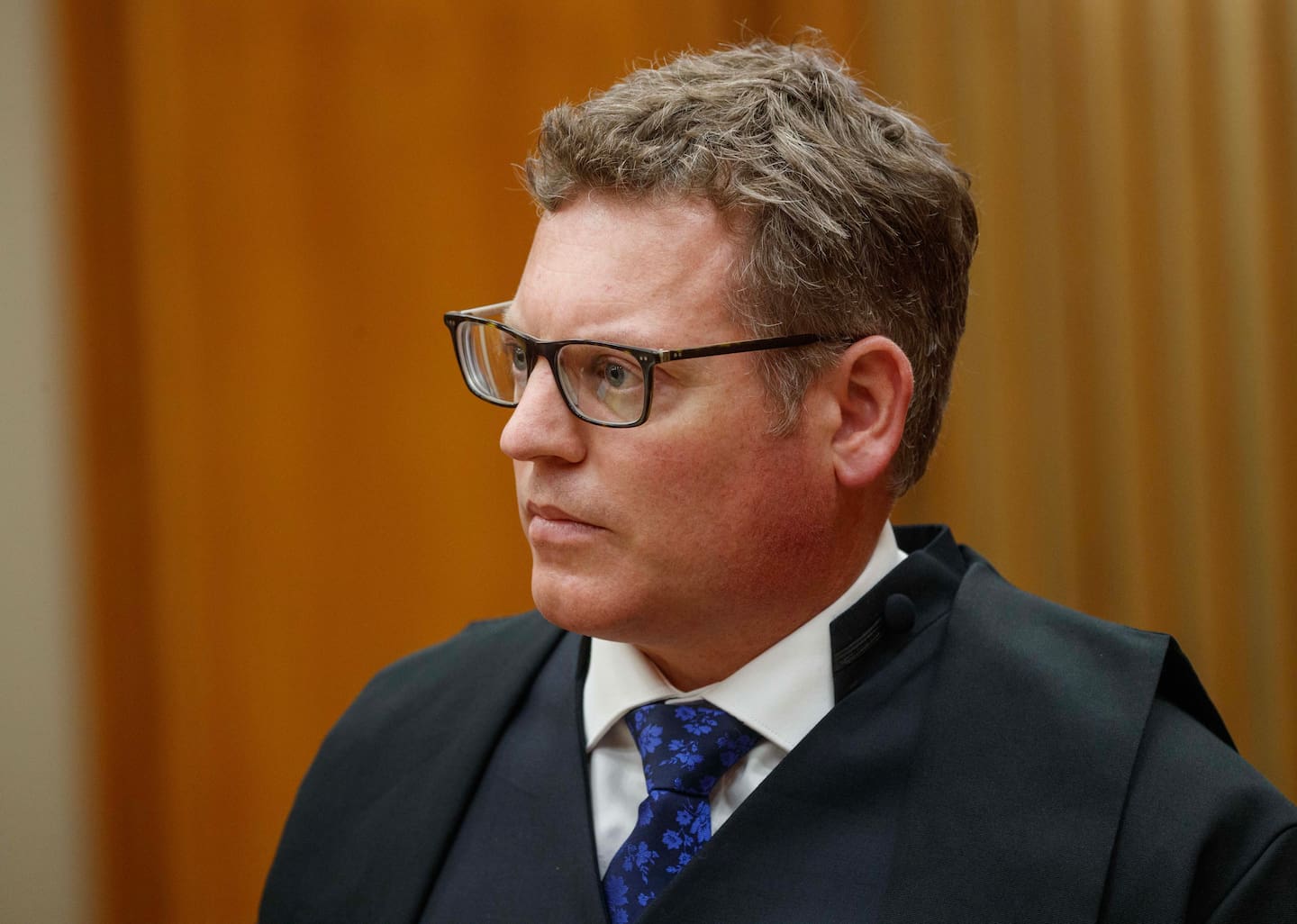
Nick Chisnall KC. Photo / Mark Mitchell
But three months later, he pointed to Watson in another photo presented to him by police as part of a montage.
The Crown argued in the appeal case that the case didn’t rest on Wallace’s identification. Half of the 53 people shown the montage identified Watson from it, the Court of Appeal was told.
The Crown also submitted that of the 1500 people at Furneaux Lodge on that New Year’s Eve, only Watson had the motive, opportunity and time to kill the pair and dispose of their bodies.
It outlined the characteristics of the killer – a male, who was alone, didn’t know his victims and had an intent to kill.
The appeal also focused on evidence about two strands of Olivia Hope’s hair that were said to have been located on a tiger-patterned blanket inside Watson’s boat.

This photo of Scott Watson, midway through a blink, was the only picture of him originally shown to the witnesses. Photo / Supplied
“The matters the applicant had raised in relation to contamination and transference were all carefully analysed by the Court of Appeal, which had the benefit of further expert evidence,” the Supreme Court noted in today’s decision.
“There is no direct challenge to the conclusion that the DNA sourced from the two hairs matched that of Olivia Hope. Rather, the focus is directed to the argument that the hair evidence was inadmissible because police and/or ESR mishandled it, risking contamination and/or transference...”
But the Court of Appeal already carefully considered that matter, and so did the jury, the Supreme Court noted, declining to re-examine the matter.
A hearing date before the Supreme Court to further examine the witness identification issue has not yet been set.
Open Justice reporters Ric Stevens, Tara Shakey and Catherine Hutton contributed to this report.
Craig Kapitan is an Auckland-based journalist covering courts and justice. He joined the Herald in 2021 and has reported on courts since 2002 in three newsrooms in the US and New Zealand.
Take your Radio, Podcasts and Music with you
Get the iHeart App

Get more of the radio, music and podcasts you love with the FREE iHeart app. Scan the QR code to download now.

Download from the app stores


Stream unlimited music, thousands of radio stations and podcasts all in one app. iHeart is easy to use and all FREE


