How the icy blast is testing NZ's power system

Sub-zero temperatures in parts of the country are keeping power generators on alert.
Transpower has been issuing notices to generators, asking them to ensure there is sufficient capacity to cope with demand as people crank up their heaters in response to an icy blast and fresh snowfalls in parts of the North Island and the South Island.
Specifically, the national grid operator has told generators to anticipate increased demand between 7.30am and 8.30am tomorrow.
On Monday, high demand drove wholesale electricity prices up to $240 a megawatt hour (MWh) at Ōtāhuhu, up from just $64MWh a week earlier.
Transpower issues a Customer Advice Notice (Can) to generators if national residual generation is less than 200 megawatts (MW).
The second step up the alert ladder is a warning notice (WRN) if an energy or reserve shortfall is identified or likely.
The third step is a grid emergency notice (Gen) if an energy or reserve shortfall is identified or likely within one hour of real time.
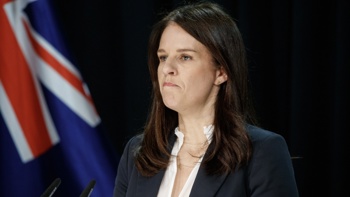
Transpower executive general manager operations Chantelle Bramley said cold temperatures and low wind saw record demand of 7141MW on Monday.
“We’ve been working closely with the sector to ensure we produce enough electricity to meet demand and keep our residual generation ‘buffer’ in the system in case we need it,” she said.
“We like to keep that buffer so it can be called on if conditions change rapidly or if there is a fault to important generation or transmission equipment.”
The trigger for a Can is when residual generation drops below 200MW, or when it approaches 200MW and Transpower predicts further downside risk.
This included advice from MetService that temperatures could be lower.
“The industry has responded to make more generation available and we are looking a lot more comfortable as a result,” Bramley said.
“But things can change quickly so we continue to watch the situation closely.
The latest string of notices, which started last Wednesday, were the first since October last year, and then May 2024 before that.
Can notices were more common from 2021 to 2023 but a lot more power generation has come online since then, Bramley said.
“It tends to happen more often when our hydro lakes are really full, as they are now at around 134% of average for the time of year,” she said.
This was because New Zealand’s coal- and gas-burning thermal units may not be running as frequently because of the abundance of renewable generation.
Bramley said thermal units can take from 12-36 hours to be ready, “so that’s why we move early with these notices so that our partners can get them turned on when we need them”.
Jamie Gray is an Auckland-based journalist, covering the financial markets, the primary sector and energy. He joined the Herald in 2011.
Take your Radio, Podcasts and Music with you
Get the iHeart App

Get more of the radio, music and podcasts you love with the FREE iHeart app. Scan the QR code to download now.

Download from the app stores


Stream unlimited music, thousands of radio stations and podcasts all in one app. iHeart is easy to use and all FREE