

About half of the country’s most vulnerable children living in material hardship will not benefit from the Government’s latest relief addressing rising fuel prices.
In oral questioning in the House from the Green Party on Wednesday, Child Poverty Reduction Minister Louise Upston said the extra $50 per week via a boost to the In-Work Tax Credit was “particularly focused on working households with children”.
She said that based on Stats NZ figures, 48% of children in material hardship lived in working households.
That leaves 52% of kids experiencing material hardship in households that do not work and are therefore not captured by the Government’s fuel relief.
Upston said, based on Inland Revenue Department (IRD) estimates, around 143,000 working families with dependent children would get the extra $50 a week in full.
‘A fast-moving situation’
“We introduced this support package at pace to provide immediate support in a fast-moving situation ... This support we are providing is intended to be timely, temporary and targeted at those most in need.”
Finance Minister Nicola Willis said that 52% figure would be children who were typically living with parents who were beneficiaries, and benefits would be adjusted for inflation on April 1.
“Their families will already be receiving an increase in income. The In-Work Tax Credit is different from many other benefits that are paid in that it is not adjusted for inflation.
“These are working parents who also face a wider range of obligations so we think it is appropriate that those working parents are who we target with this relief.”
In announcing the relief package on Tuesday, Willis and Prime Minister Christopher Luxon acknowledged people ineligible for support would be disappointed but maintained it was a “responsible” decision that avoided inflation hikes.
Beneficiaries and superannuitants would not receive the boost, with the Government arguing their payments would be adjusted from April 1 as normal.
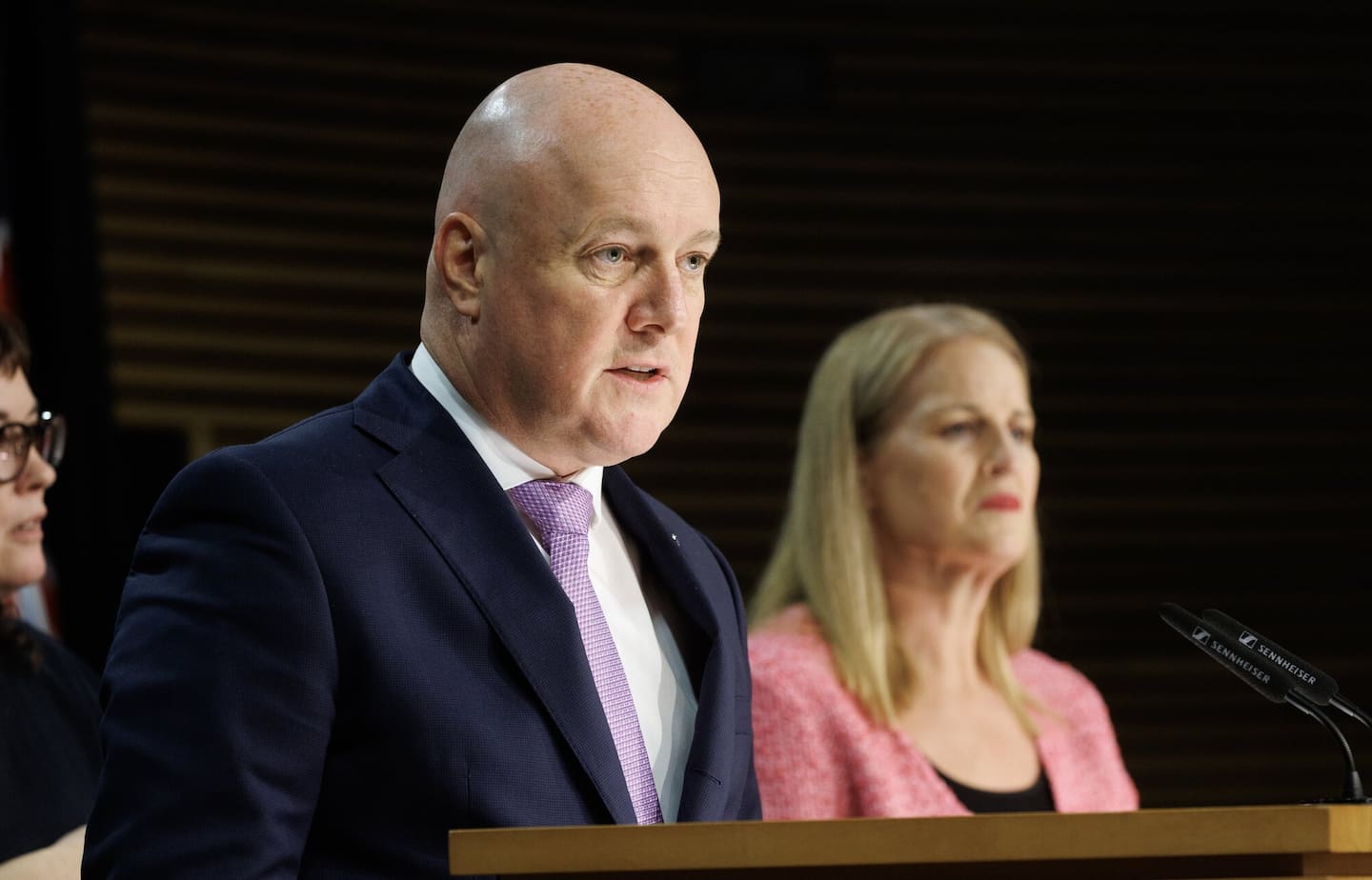
Louise Upston, here pictured with Christopher Luxon, faced questions in Parliament today about the fuel relief. Photo / Mark Mitchell
There are 18 questions used to measure material hardship. A family are classed as living in material hardship when they lack seven of the items or services referred to on the list. This includes putting up with the cold to keep heating costs down, delaying doctors’ visits to avoid GP fees or being unable to afford sturdy shoes or warm blankets.
Material hardship rates indicate the actual day-to-day living conditions of New Zealand households and their ability to afford things most people would regard as essential or near essential.
At the press conference, Luxon said he accepted the Government could not alleviate pressure for everybody but claimed the support package targeted the most “squeezed middle”.
“These are the people that are doing it the toughest.”
Petrol has hit $4 a litre in some Auckland suburbs, with an average of $3.30 a litre for unleaded 91 and $3.61 a litre for unleaded 98 across the country.
Willis hoped the additional payment would help people feed their children and commute to and from work and school. She acknowledged some people would say it wasn’t enough, but reiterated her focus on controlling inflation.
“We are doing what we can do responsibly.”
Willis firmly dismissed suggestions of extending support to beneficiaries, saying no advice had been sought on the matter and that “our focus is on working Kiwis”.
The increase would begin from April 7 and be paid weekly or fortnightly, depending on when people were paid. About 143,000 families would receive it, as well as about 14,000 families who received the tax credit at an abated rate.
Green MP Ricardo Menéndez March told the Herald that people in poverty would be hardest hit by the rise in fuel prices triggered by conflict in the Middle East, which has effectively prevented ships from passing through the Strait of Hormuz, a major shipping route.

Green Party co-leader Marama Davidson and Greens MP Ricardo Menéndez March speak to students at in Mt Roskill. Photo / Ben Dickens
Figures released in February for a 12-month period between 2024 and 2025 show that material hardship and poverty rates remain persistently high, with around 14% of New Zealand children living in material hardship.
Stark disparities also remain for Māori, Pacific and disabled children. One in four – or one quarter – of Māori children, one third of Pacific kids and one in four disabled children are living in material hardship.
Menéndez March said his party would urge the Government to extend support to all families in hardship, whether they were working or not.
Families whose form of income was a benefit also required consistent access to fuel to travel to job interviews, pick up their kids from school or take them to the doctor. These families in rural areas might have to drive long distances to get to their local Work and Income office or their kids’ school, which could be in a different township, he said.
“People hit by unemployment, young people with no kids, disabled people on income support are some of the hardest hit by this crisis, and yet this Government is leaving them behind.
“We have a choice between letting families and children fall through the cracks or ensure everyone receives adequate support.”
Julia Gabel is a Wellington-based political reporter. She joined the Herald in 2020 and has most recently focused on data journalism.
Take your Radio, Podcasts and Music with you
Get the iHeart App

Get more of the radio, music and podcasts you love with the FREE iHeart app. Scan the QR code to download now.

Download from the app stores


Stream unlimited music, thousands of radio stations and podcasts all in one app. iHeart is easy to use and all FREE


