Prime Minister Christopher Luxon has a lot of explaining to do when he meets with his Samoan counterparts – a relationship he described to the Herald as “one of family” – as the wreck of the New Zealand Navy ship, the HMNZS Manawanui, remains abandoned off the coast of the island nation.
Luxon and a delegation of high-profile New Zealanders are visiting Samoa and Tonga this week, marking New Zealand’s first official engagements with the two nations’ new Governments and leaders.
Samoa’s new Prime Minister, Laaulialemalietoa Polataivao Leuatea Fosi Schmidt, was elected in September, succeeding the nation’s first female head of state, Fiame Naomi Mata’afa. Tonga’s new leader, Fatafehi Kinikinilau Lolomana’ia Fakafānua (Lord Fakafānua), was elected in December.

Prime Minister Christopher Luxon expects fuel security to be a hot topic of conversation with leaders in Samoa and Tonga. Photo / Alyse Wright
“It’s important to build relationships with both Prime Ministers and their Cabinets, and it’s a chance, now that they’ve been in the job for a few months, to get a sense of what their agendas are,” Luxon said.
About 9% of New Zealand’s population identifies as Pacific, including around 4% as Samoan and 2% as Tongan, according to the latest Census.
“This relationship for New Zealand is one of family,” Luxon said.

The wreck of the HMNZS Manawanui underwater on the Tafitoala Reef, on the south coast of Upolu, in August. Photo / New Zealand Defence Force
His visit comes against a backdrop of concern over spiking fuel prices as conflict continues in Iran, which has caused a chokehold on a major oil and gas shipping route. Pacific nations already experience typically high and volatile fuel prices because of their reliance on imports and shipping distances. With dependencies on tourism, they are also susceptible to any hikes on jet fuel prices.
“I think a major thing will be the fuel security in the Pacific,” Luxon said.
“They have dealt with disruptions in oil price spikes before and done very well. I’m sure that will come up in conversation.”
Questions remain over what is to happen with the wreck of the $100 million Manawanui that sunk in October 2024, spilling oil and affecting local Samoan communities near the coast. Charges were laid against three naval officers after an inquiry found the cause was human error and New Zealand has paid Samoa $6m in compensation over the incident.
“We’ve shared the wreck assessment [which has expert advice on how secure the wreck is] with the Government of Samoa and that’s really in their court now,” Luxon said.
“We haven’t had environmental concerns with the wreck, at all. They, in fairness, need to analyse that report and the two Governments [New Zealand and Samoa] will work together through the next steps.”
Defence Minister Judith Collins, who led much of New Zealand’s response to the sinking, said she considered the issue largely resolved and deferred further questions about how Samoans may interpret the situation to Foreign Affairs Minister Winston Peters.
Peters said it was an extraordinarily unfortunate and terrible accident, although “some people even see it as a serious underwater asset” for the likes of tourism and diving.
Nick Ling, an associate professor in biodiversity and ecology at the University of Waikato, said shipwrecks can make excellent artificial reefs and could provide economic opportunities to communities through tourist diving, but locals affected negatively by the sinking may not view the wreck in the same light.

Containers were retrieved from the HMNZS Manawanui, but the future of the shipwreck remains uncertain. Photo / New Zealand Defence Force
If the wreck were to be left where it was more work would be needed, such as sealing internal accesses, before it would be considered safe for divers, he said.
New Zealand’s visa requirements for Pacific travellers are also set to be a key topic. Peters has warmed up that conversation for Luxon and officials with last week’s announcement of a $55 reduction in visitor visa fees for Pacific travellers.
But the changes don’t go as far as some in the Pacific are asking for, with a petition, led by former MP Arthur Anae, raising questions over why Pacific travellers don’t have the same cheaper and straightforward access to New Zealand as the more than 60 countries under the NZeTA scheme do.
Peters said the issue of Pacific nations joining the scheme was a “work in progress”, that he was studying the material and it would be some time before he could provide answers, but he hoped, in the meantime, the visitor visa fee changes would be appreciated.
Police Commissioner Richard Chambers is among the delegation on the trip and Police Minister Mark Mitchell is joining for the Samoa leg only.
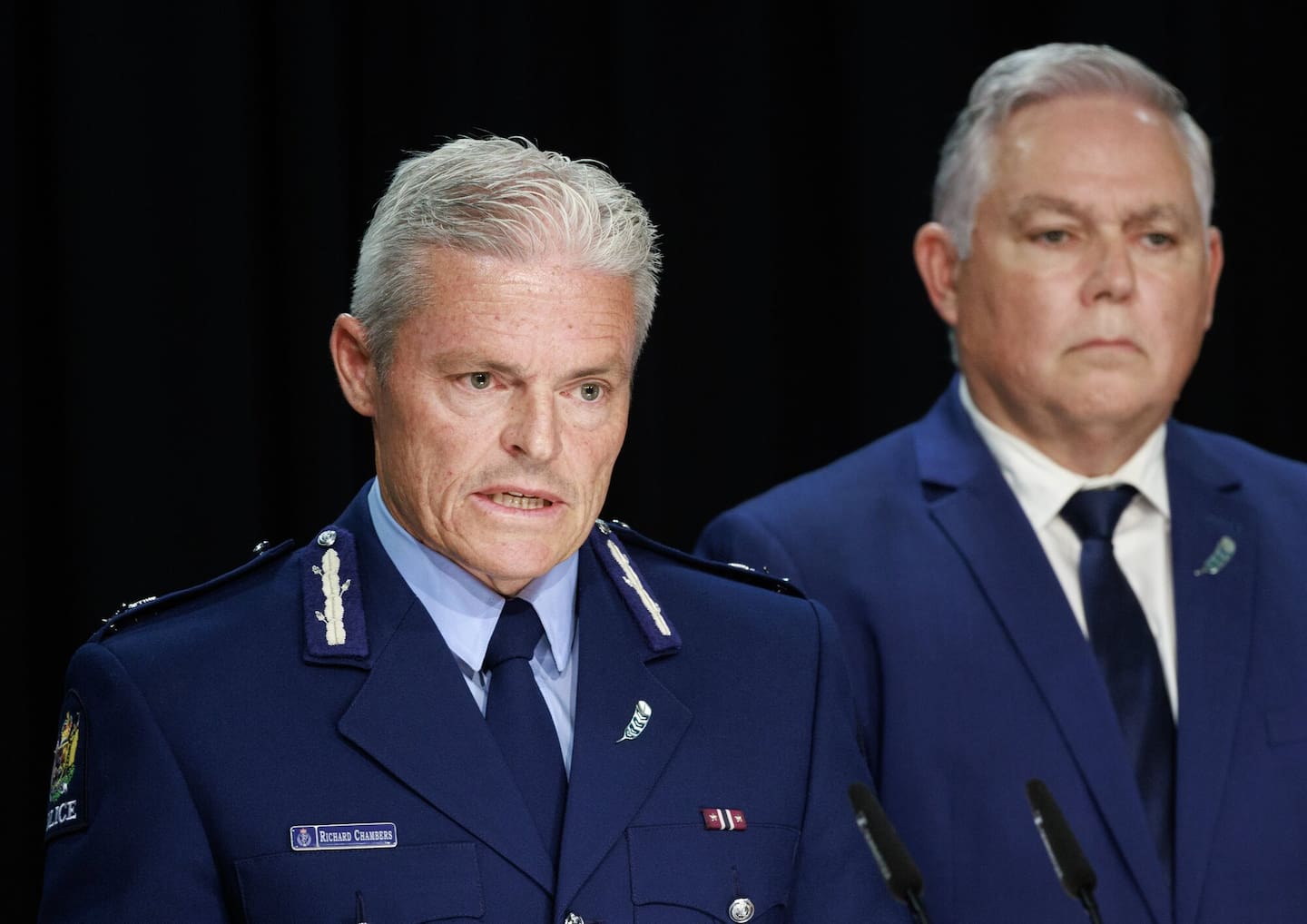
Police Commissioner Richard Chambers (left) and Police Minister Mark Mitchell will be joining the Prime Minister's trip to the Pacific. Photo / Mark Mitchell
Transnational crime is expected to be a focus of the trip amid concerns about the Pacific being used as a highway and their nations as transit points for international drug trafficking into New Zealand.
Luxon said transnational drug crime was a “major, major issue” for the leaders of Samoa and Tonga.
“They are seeing the social harm happening within their communities, so the question is how do we disrupt the drugs at sea? How do we catch them at our respective borders?
“You’ve got to think of the Pacific as a border, because once it gets into the Pacific, it gets into New Zealand and Australia very quickly,” he said.
New Zealand’s transnational crime unit works with the Pacific Transnational Crime Co-ordination Centre in Apia and other units throughout the region.
Julia Gabel is a Wellington-based political reporter. She joined the Herald in 2020 and has most recently focused on data journalism.
Take your Radio, Podcasts and Music with you
Get the iHeart App

Get more of the radio, music and podcasts you love with the FREE iHeart app. Scan the QR code to download now.

Download from the app stores


Stream unlimited music, thousands of radio stations and podcasts all in one app. iHeart is easy to use and all FREE