Follow
the podcast on


If I remember correctly, cicadas used to be quite a bit more common in the Auckland Summer Months. Yep they changed from year to year and occasionally almost completely quiet, but that was rare, to be frank.
In Christchurch they’ve been a lot less noisy – especially the past 4 years or so. But early 2026 it started with a few choruses and now the “clappers” are also occupying the sound-scape.
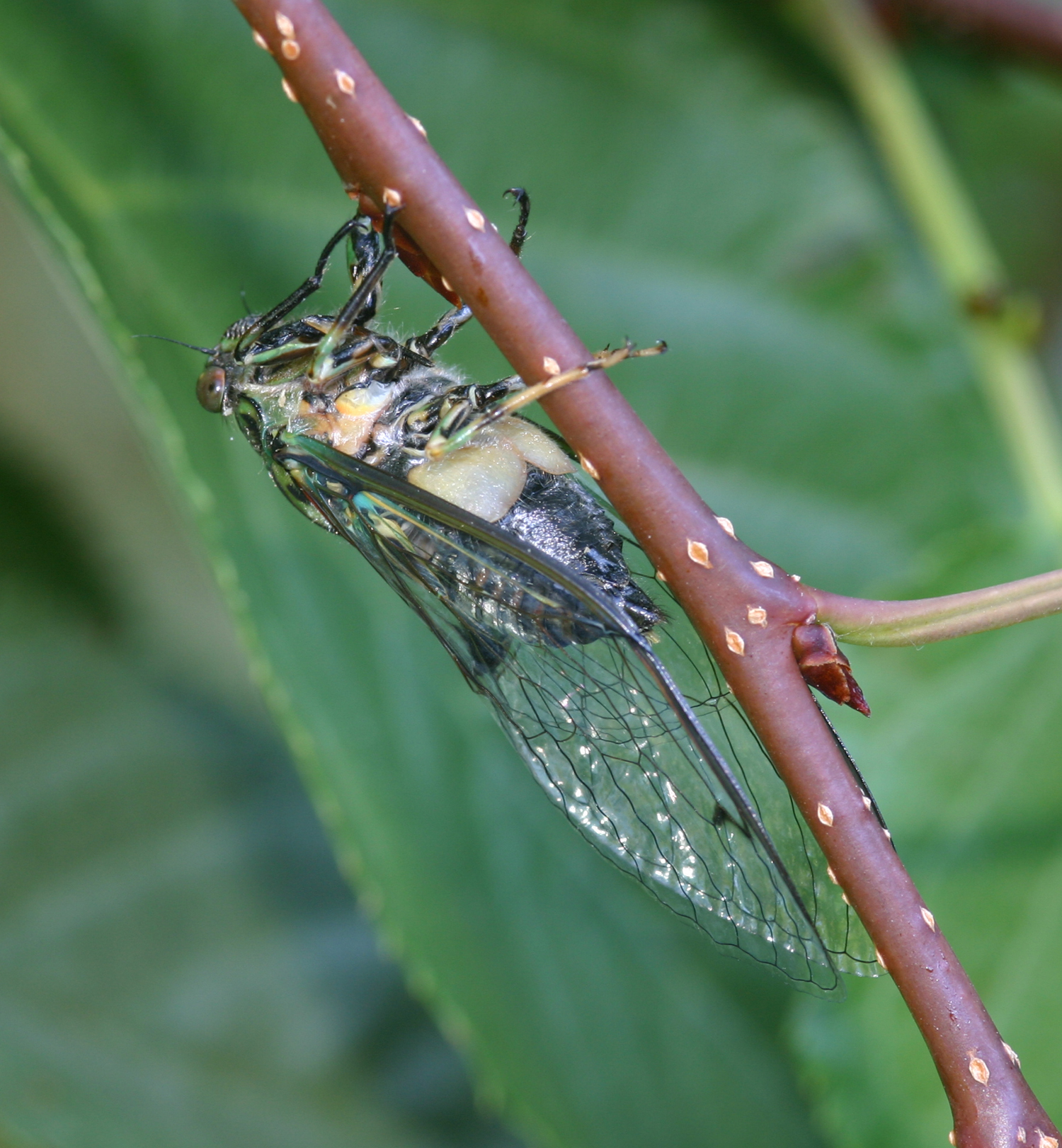
Male cicadas have so-called Timpany, which are little drum cavities on the underside of the bellies. They look a little bit like bent and shaped flaps.
The timpany are really good at amplifying the sounds they make to lure females closer and closer – Party time!
Females are known to aim for the noisiest male on the block. Egg-laying is happening from now on, at this time of the year.
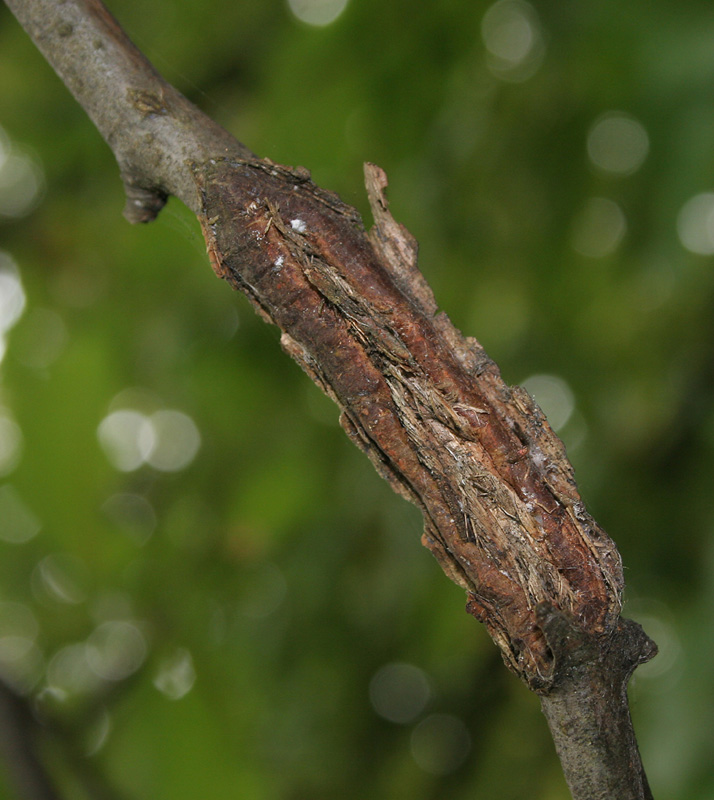
When the female has a good number of fertilised eggs to get rid of, she climbs into a suitable host tree. Her Ovipositor is a pretty useful tool to lay eggs inside the wood of a branch; a dozen or two are laid in an elegant pattern in the bark, where the eggs develop into very small larvae; these will emerge late autumn or early winter.
Gardeners are often quite good at finding these herring-bone pattern because the damage in the twigs often causes weak-spots, leading to broken branches; Fruit growers are not keen on having many damaged branches in the orchard.
Life Cycle:
The eggs hatch in a few months and the tiny “nymphs” drop off the branch or twig in which they were born... drop to the ground and start digging. They create a tunnel and a cell around a tree root (or shrub root – or even grass roots) and suck the sweet phloem juices out of the root system – sugar is turned into protein and the body grows.
They shed their skin 4, 5, 6 times and a few years later (up to 5 or 6 years in the soil!) they climb to the top layers of the soil... waiting for a perfect time to emerge at night in late spring or summer
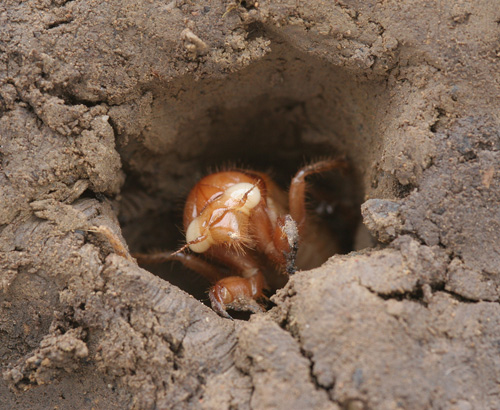
At night the nymphs come out of the soil, climb up a tree trunk and grasp the bark
Their skin splits and out comes a fully winged adult cicada; it pumps up its wings and is ready for some R&R... singing and dancing
Threats to larval cicadas:
When they are in the top layers of the soil late winter/early spring, they are in easy reach of the probing bills of kiwi.
Yep – cicada nymphs are the spring-time bulk food of Northland Brown Kiwi.
Take your Radio, Podcasts and Music with you
Get the iHeart App

Get more of the radio, music and podcasts you love with the FREE iHeart app. Scan the QR code to download now.

Download from the app stores


Stream unlimited music, thousands of radio stations and podcasts all in one app. iHeart is easy to use and all FREE