
Scientists teach lettuce how to make its own meat protein
Follow
the podcast on

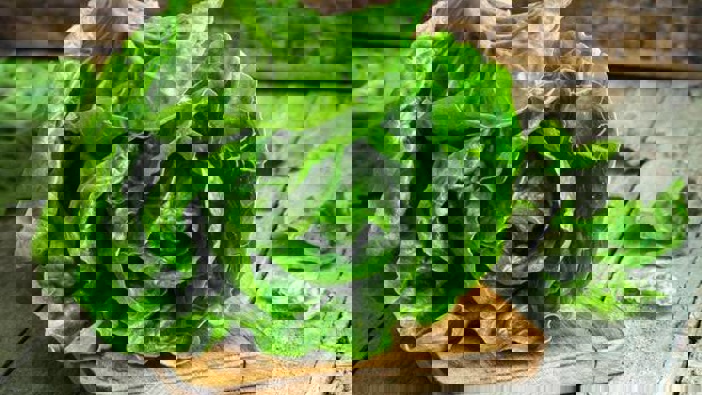
The world of meat alternatives could be about to change after new research published in the journal Frontiers in Plant Science came out this week.
Instead of trying to make plants taste more like meat using flavourings, they've taught plants to manufacture myoglobin, the same protein that gives meat its distinctive colour, flavour and nutritional value.
Myoglobin stores oxygen inside muscle cells, but it also gives meat many of its defining characteristics. It contains iron-rich heme molecules that contribute to meat's red colour, metallic taste and savoury "umami" flavour.
In plants, chloroplasts are the structures where photosynthesis happens, converting sunlight into energy.
Chloroplasts are also excellent protein factories which carry multiple copies of its own DNA.
That means if you insert a useful gene into the chloroplast genome, the plant can produce very large amounts of the corresponding protein.
The researchers used a gene gun where tiny gold particles were coated with DNA containing the pig myoglobin gene and fired into the leaves of young tobacco and lettuce plants.
Some of those microscopic DNA-coated particles entered the chloroplasts, where the new gene became incorporated into the chloroplast's own circular DNA.
The transformed plants were then grown to maturity where they flowered, produced seeds and their offspring inherited the new gene
The scientists crushed leaf tissue from the mature plants, separated all the proteins using gel electrophoresis, and then used an antibody test called a Western blot to specifically detect myoglobin which showed up in both the tobacco and lettuce plants.
Myoglobin only works properly when it contains a heme group, an iron-containing molecule that sits in the middle of the protein.
The researchers found that only around 35 percnet of the plant-produced myoglobin contained heme, compared with around 80 percent for myoglobin produced in bacteria.
The plants were making the protein successfully, but many of the molecules were still missing their iron-containing centre.
That tells scientists where the next engineering challenge lies and future versions will likely focus on helping plants load more heme into the protein.
Despite producing large amounts of myoglobin, the plants grew normally, flowered, produced seeds and remained fertile which is an encouraging sign if this technology is ever scaled up.
We could have a future where large quantities of leafy crops could be grown in fields and the myoglobin extracted and purified before being added as an ingredient to plant-based meat products, improving their colour, flavour and nutritional value.
The researchers also speculate that one day, if regulators approve it, specially engineered lettuce could even become a source of heme iron itself.
So does it taste like meat? We don't know yet. The researchers didn't cook burgers or run taste tests. This study was about proving that plants can manufacture the protein in the first place. The next challenge is increasing the amount of fully functional, heme-containing myoglobin before testing whether it really improves the flavour of plant-based meat.
LISTEN ABOVE
Take your Radio, Podcasts and Music with you
Get the iHeart App

Get more of the radio, music and podcasts you love with the FREE iHeart app. Scan the QR code to download now.

Download from the app stores


Stream unlimited music, thousands of radio stations and podcasts all in one app. iHeart is easy to use and all FREE


