
Ruud Kleinpaste: Working with asparagus in the winter
Follow
the podcast on

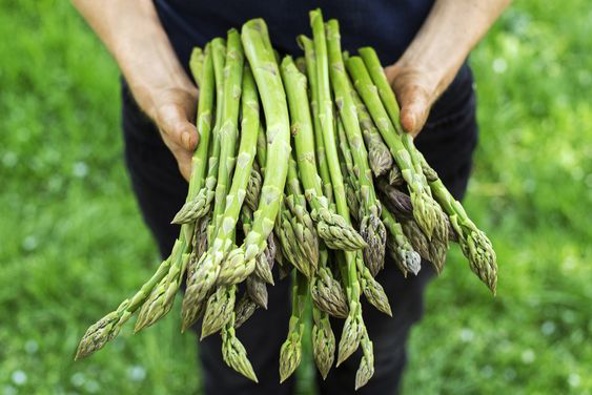
To grow Asparagus, you’ll truly need a real garden bed.
Nice and deep, preferably raised if you have wet soils in winter – at least 20cm above the soil level, but 30cm is even better. I planted my crowns about 7 years ago, bought them at Oderings Garden centre when the crowns were dormant.
Plant in deep friable soil: mix soil, loam with lots of compost, add some manure (animal excrement) or sheep pellets, and dose with a good lot of lime – Asparagus likes a high pH (around 7 maybe even more).
Dig it all deep (at least 30cm deep, or more if possible) so that the roots can go wandering down and side-ways with ease.
I planted my new plants with the roots splayed in all directions of the compass (star-shaped). About 10cm deep, rows about 50cm apart, and the plants spaced around 40cm in the rows.
They’re covered with friable soil that will warm up in spring, waking the plants and starting their growth. Don’t let the plants dry out in winter – keep them moist but not soaking wet!
We had a good growth of ferns – let them go. They even produced heaps of bright red berries! And the weeds tried to establish themselves in-between the asparagus plants, but I more-or-less kept on top of them because they are weeds! Not always though!
A trick: I did get into the habit of inter-planting with thin onions and Egyptian walking onions – let these interlopers find their spot in between the asparagus. In spring the main crop will come up and give us asparagus, but in summer, autumn, and even winter, the onions will take over when the asparagus retreat with their huge flowering and elegant, tall stems ready to go down. And there is no competition amongst that lot of vegetables!

Now, mid-winter stuff to do:
Get rid of all the last weeds (as much as you can). I will also cut off the old brown asparagus fern-fronds and take them off the bed, trying not to spill too many red berries – I don’t want any more seedlings/new plants in the asparagus bed as it will get too overcrowded too soon. Best to let the original plants develop for at least three-four years, so they keep producing for a long, long time to come.
Once the bed is cleared, line it a bit then top up with a fresh layer of organic compost —nice dark compost-y stuff— and some Nitrophoska Blue. Asparagus likes that!

They also like some animal manure (I got the Halswell Quarry sheep well-trained!) and even some salty (unwashed) seaweed if you can find it somewhere. Just lay that over the top and in spring the spears will burst through the compostables…
There’s nothing better than fresh asparagus! Followed by fresh onions and other stuff in the bed.
LISTEN ABOVE
Take your Radio, Podcasts and Music with you
Get the iHeart App

Get more of the radio, music and podcasts you love with the FREE iHeart app. Scan the QR code to download now.

Download from the app stores


Stream unlimited music, thousands of radio stations and podcasts all in one app. iHeart is easy to use and all FREE


